

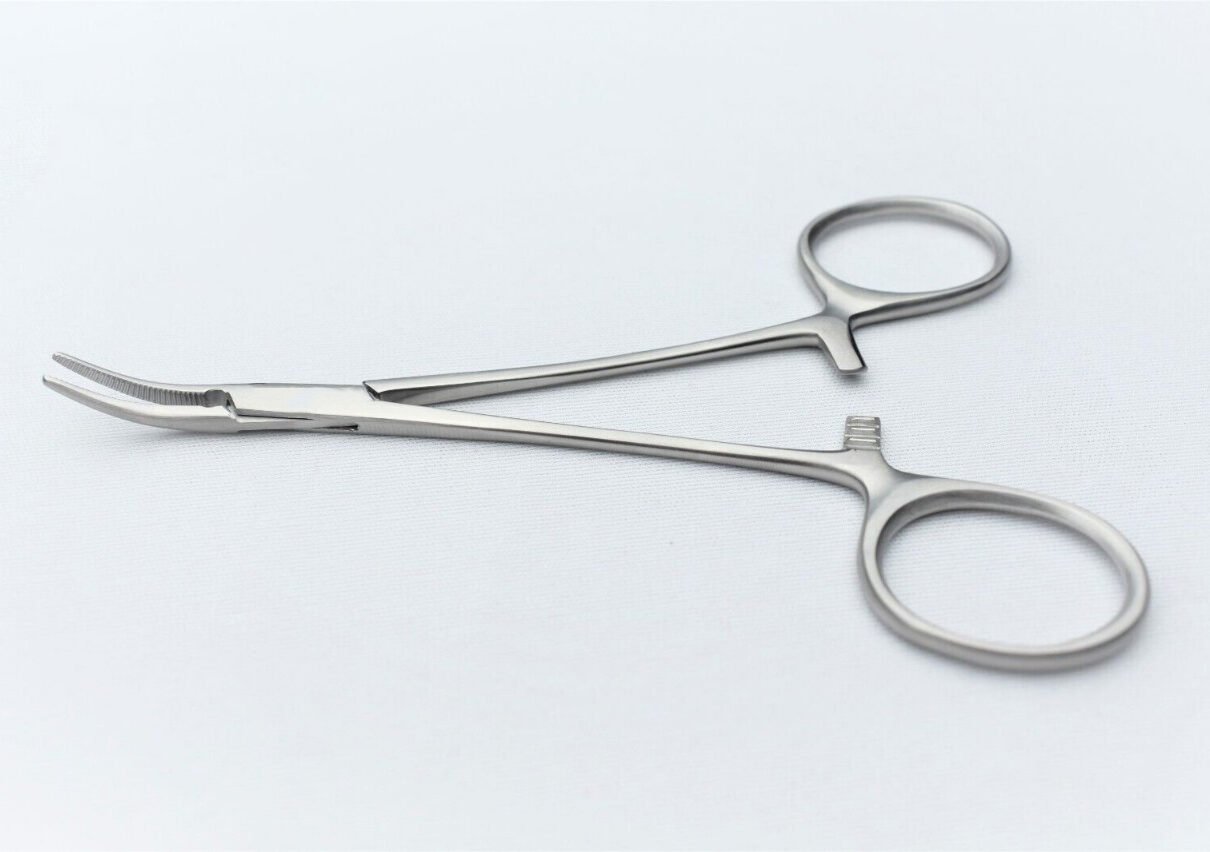
Ratcheted Forceps: Essential Surgical Instruments for Precision and Control
In modern surgery, precision and control are crucial. Ratcheted forceps provide both. Because of their unique ratcheted mechanism, surgeons can maintain a secure grip without applying excessive force, making these instruments indispensable in many surgical procedures.
What Are Ratcheted Forceps?
Ratcheted forceps are surgical tools featuring an adjustable tension mechanism with interlocking teeth. This design allows the instrument to lock onto tissue, vessels, or sutures securely. Unlike standard forceps, the ratchet prevents slippage, which helps surgeons manipulate tissues with greater accuracy.
In addition, surgeons rely on these forceps to reduce trauma to surrounding areas, ensuring safer surgical outcomes.
Types of Ratcheted Forceps
Ratcheted forceps come in various shapes, each tailored for specific surgical needs. For example:
1. Straight Forceps
- They provide direct access to tissues in linear surgical approaches.
- Surgeons use them for general grasping and holding.
2. Curved Forceps
- Curved designs allow surgeons to reach difficult or angled areas.
- They are particularly helpful when procedures require precision around organs.
3. Angled Forceps
- Angled forceps offer flexibility in tight surgical spaces.
- Therefore, they are common in ophthalmic, neurosurgical, and microsurgical procedures.
4. Allis Tissue Forceps
- These toothed forceps securely hold firm tissues such as fascia.
- They prevent slipping while allowing a firm grip without damaging surrounding tissues.
Uses and Applications
Ratcheted forceps are essential for procedures that demand precision. For instance:
- Surgeons use them to grasp delicate tissues in microsurgery.
- They hold blood vessels or sutures in place during complex procedures.
- In ophthalmic and neurosurgery, surgeons manipulate tissue safely and efficiently.
- Toothed variants like Allis forceps secure firm tissues while reducing the risk of injury.
By using ratcheted forceps, surgeons can maintain a consistent grip, which minimizes repeated adjustments and allows them to focus on the procedure.
Why Ratcheted Forceps Are Essential
The ratchet mechanism ensures several advantages:
- Precision — Surgeons manipulate tissues accurately, reducing complications.
- Control — Adjustable tension allows firm grip without excessive force.
- Versatility — Various shapes and sizes suit different procedures.
- Safety — Tissue damage decreases, and instruments stay in place.
Consequently, incorporating ratcheted forceps in surgeries helps improve efficiency, enhance patient outcomes, and reduce risks.
Conclusion
Ratcheted forceps are more than just surgical tools. They provide precision, control, and safety in even the most delicate procedures. From microsurgery to neurosurgery, surgeons can grasp, hold, and manipulate tissues confidently.
Ultimately, selecting high-quality ratcheted forceps ensures reliable performance, surgical precision, and better patient outcomes. By using these instruments, hospitals and surgeons can deliver safer, more effective surgical care.
